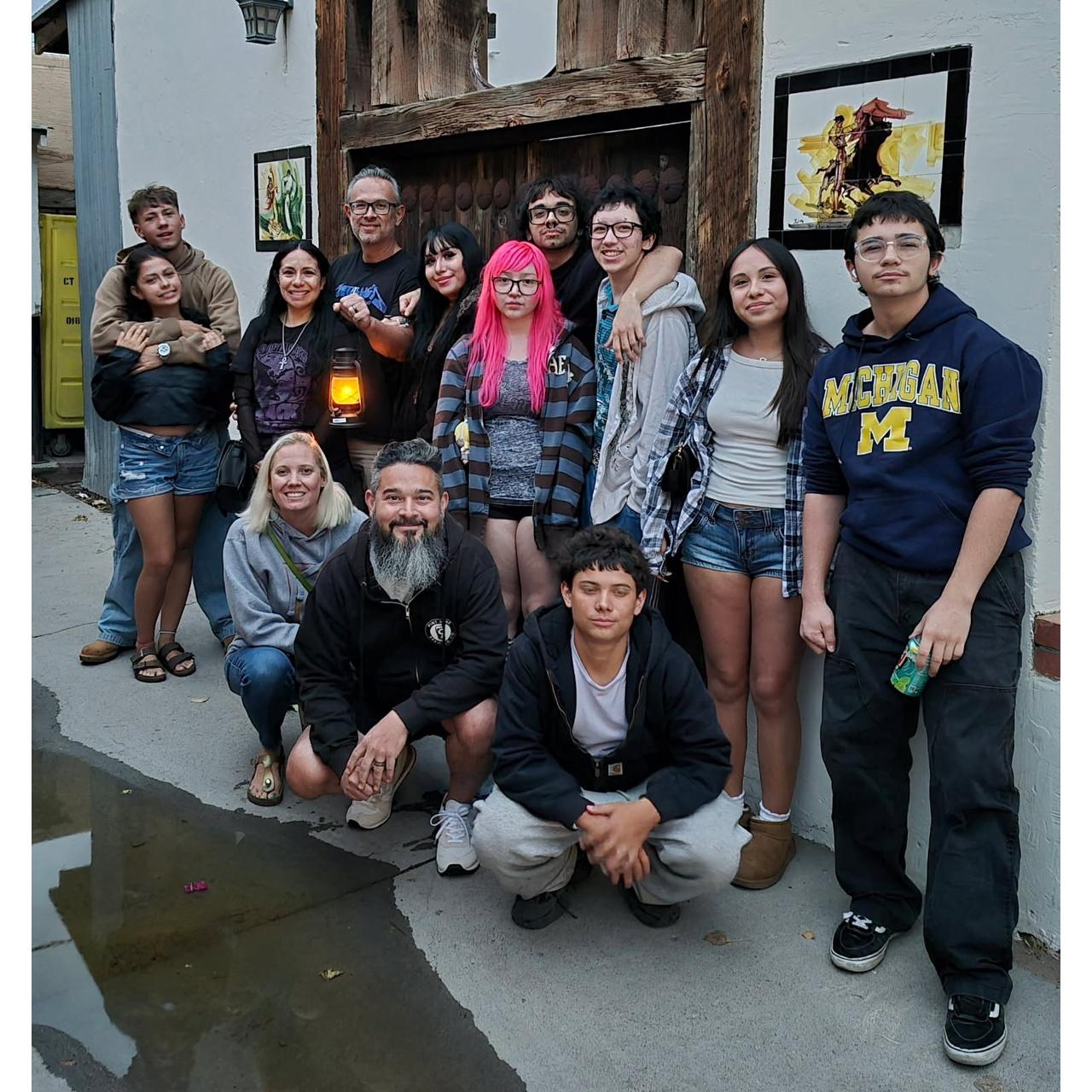
Albuquerque: 8pm Original Ghost Tour of Old Town
this tour $35
$10 $220
One documented death in a 1927 picture palace, a good deal of folklore around it, and a free old town that is older than most of the country. What is real and what each thing costs.
The KiMo opened on 19 September 1927 in Pueblo Deco - a short-lived style that put Art Deco geometry together with southwestern and Native motifs, and there is very little of it anywhere. In 1951 a boiler in the basement exploded while a six-year-old boy, Bobby Darnell, was on the stairs between the balcony and the concession stand. It destroyed part of the lobby and the staircase, and it killed him. That is the documented part, and it is enough.
Everything after the explosion is story: sightings on the staircase and in the balcony, the offerings people leave backstage, the productions said to have gone wrong when the offerings stopped. None of it is recorded in the way the 1951 explosion is recorded. It is worth separating the two, because a real child died in that building and the folklore has a habit of turning him into a character. The KiMo is a working theatre owned by the city; the way inside is a ticket to something on its programme.
The plaza was laid out in 1706 and San Felipe de Neri, on its north side, has been in continuous use since 1793 - which makes it older than most buildings anywhere in the United States, and it is still a parish church rather than an exhibit. Walking the plaza and the lanes off it is free at any hour. The ghost stories attached to the surrounding buildings are the usual restaurant-and-shop variety; the age of the place is the real attraction and does not need them.
There is no ticketed haunted building here, no sealed interior, no cemetery with a famous story. Compared with Tombstone four hundred miles west or Santa Fe an hour north, the city's documented material is thin, and pages that list a dozen haunted Albuquerque sites are mostly listing restaurants. Saying so is more use to you than padding the list.
Old Town and the plaza are free. San Felipe de Neri is a working church, open and free, and should be treated as one. The KiMo needs a ticket to something it is showing. So an Albuquerque ghost walk is narration over a free plaza, which can be a pleasant hour with the right guide - but go in knowing that the city's single documented tragedy is one boiler and one child, and that everything else on the route is atmosphere.
That sits in the typical band for the category, whose median is $30.
1 of the 1 Albuquerque tours we track . Ordered by review depth.